Donate to support Ukraine's independence.
Generated by AI

Replace Battery in Wahoo Elemnt Roam v1

Replacing Battery in Wahoo Elemnt Roam v1 I love cycling, and like any passionate rider, I have a few bikes. And like every respectable biker, I use a cycling computer. Mine is an older one - the Wahoo Elemnt Roam v1. It covers all my daily needs perfectly: heart rate, cadence, speed, and navigation. It’s a wonderful device or at least it was until recently, when its battery died. Fully charged, it lasted only 7 km before dying completely. ...

October 28, 2025 · 3 min · 584 words · Serhii Kaidalov
Generated by AI

Fix TLS Trust Errors Between Kubernetes Services with cert-manager and trust-manager

Managing Internal TLS Trust in Kubernetes with cert-manager and trust-manager How do you maintain a secure SSL/TLS connection between services within a Kubernetes cluster? One simple (but unsafe) answer is to create a self-signed certificate and skip verification with a flag like --insecure-skip-tls-verify. A more advanced solution is to use a service mesh (e.g., Linkerd, Istio), which automatically manages certificates and trust. But what if you want something simpler and lighter? That’s where trust-manager comes in. It’s the easiest way to manage trust bundles in Kubernetes and OpenShift clusters. ...

October 27, 2025 · 5 min · 853 words · Serhii Kaidalov
Generated by AI

Running Pi-hole and DNSCrypt in Containers on MikroTik

Updated May 2026: This guide has been revised to support RouterOS 7.22. Starting with RouterOS v7.5, MikroTik introduced the ability to run Linux containers directly on supported devices. This opens up a world of possibilities from running ad-blockers like Pi-hole to local DNS resolvers such as DNSCrypt-proxy. In this guide, I’ll show how I migrated my Pi-hole setup from a Raspberry Pi Zero to a MikroTik router. So far it’s been running smoothly. ...

October 16, 2025 · Last Modified: May 4, 2026 · 4 min · 775 words · Serhii Kaidalov
Generated by AI

Get a Telegram Alert Every Time Someone Logs Into Your Server

SSH Telegram Notify Have you ever wanted to get a Telegram notification when someone logs into your server via SSH? I did! I also wanted to automate the entire setup with Ansible for faster deployment and updates. So, I created an Ansible role that does exactly that. It automatically configures your servers to send login/logout notifications to Telegram. It currently supports Debian/Ubuntu, but can easily be extended to other Linux distributions. ...

October 10, 2025 · 3 min · 596 words · Serhii Kaidalov
Generated by AI

CloudTrail: Infrastructure changes notifications

AWS infrastructure changes notifications with Slack CloudTrail is a powerful service that helps audit the actions of users and roles in your AWS account. It can be integrated with other services to improve the way you react to infrastructure changes. This is especially useful for large projects. In this article, we’ll describe both a basic and an improved way to track infrastructure changes in your AWS account and send notifications to Slack. ...

Generated by AI

High Cardinality Labels Are Killing Your Prometheus: How to Find and Fix Them

In Prometheus, memory usage is dominated by the number of time series currently stored in the head block (plus indexes). Your goal is to find which metrics/labels/targets create the most series and which ones churn (get created/removed frequently). Use the built-in TSDB status endpoint Prometheus exposes a helper endpoint that lists the top offenders: http://<prometheus>:9090/api/v1/status/tsdb?limit=50 Useful sections in the JSON: seriesCountByMetricName – metric names with the most series labelValueCountByLabelName – label names with the most distinct values seriesCountByLabelPair – specific label=value pairs that explode series (Recent versions) memoryInBytesByLabelName – memory cost per label name You can filter further with match[], for example: ...

September 14, 2025 · 3 min · 445 words · Serhii Kaidalov
Generated by AI

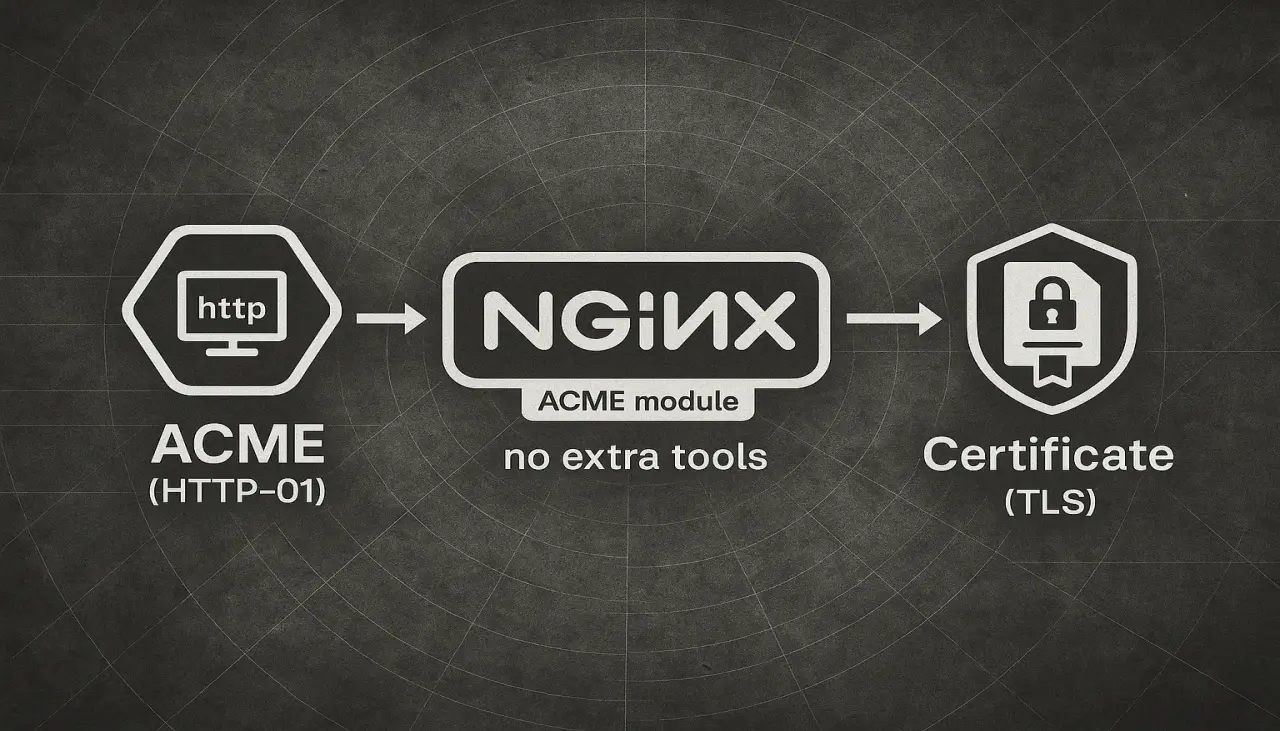
Automate TLS Certificate Renewal in Nginx Without Certbot

On Aug 12, 2025, NGINX announced native support for the ACME protocol: https://blog.nginx.org/blog/native-support-for-acme-protocol This is a great improvement because you no longer need extra tools to issue SSL certificates. The first release supports only the HTTP-01 challenge, so wildcard certificates are not possible yet. For wildcards you need DNS-01 with DCV delegation . Let’s see how it works. ...

August 17, 2025 · 4 min · 672 words · Serhii Kaidalov
Generated by AI

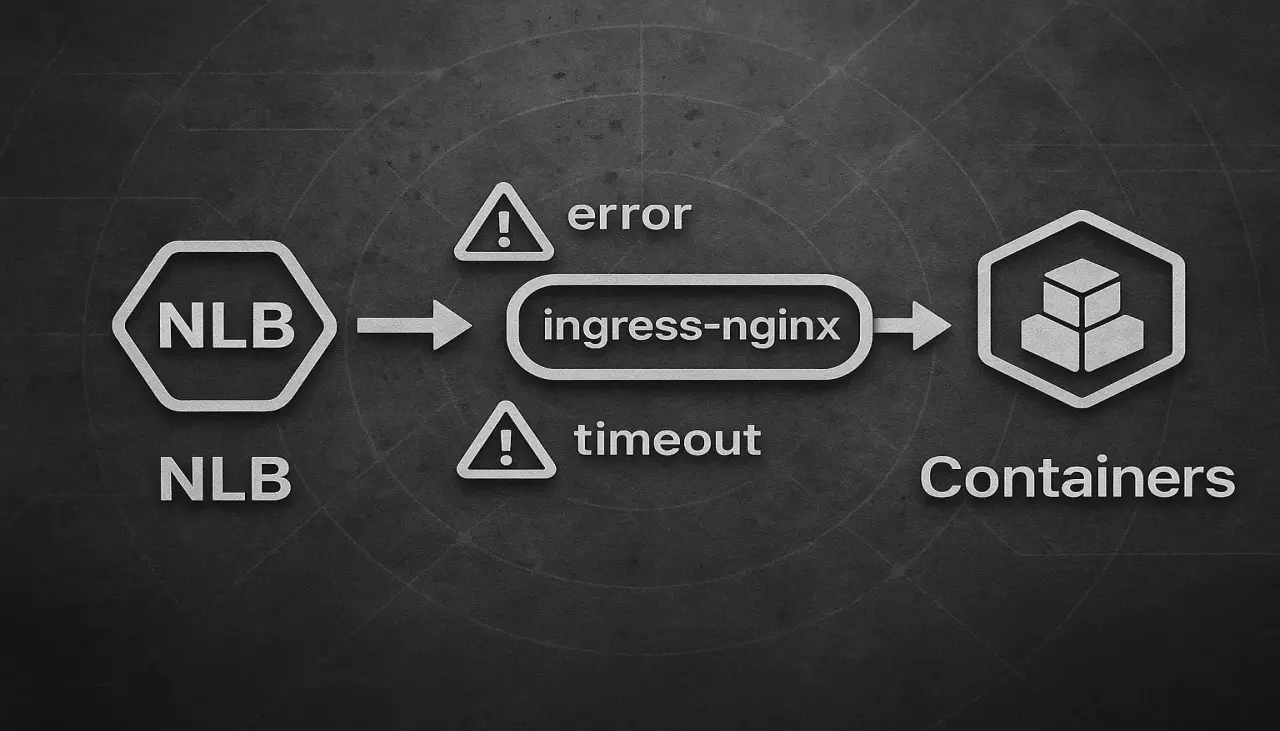
AWS Target Group IP Preservation

Reducing Cross-AZ Traffic in AWS and Avoiding NAT Loopback Pitfalls Recently, we decided to reduce cross-AZ traffic in our AWS environment to save on data transfer costs and improve latency. Current Setup Here’s a simplified view of our setup: NLB -> ingress-nginx -> containers Inside our EKS cluster, we enabled Topology Aware Routing . On the NLB and its target group, we: ...

July 12, 2025 · 3 min · 479 words · Serhii Kaidalov
Generated by AI

How to Manage Terraform/OpenTofu/Terragrunt Versions?

How to Manage Terraform/OpenTofu/Terragrunt Versions? How often do you need to switch Terraform, Terragrunt, or OpenTofu versions when jumping between projects? For me, it’s pretty often and honestly, I used to hate it. Package managers like brew only let you install one version of a tool at a time. So every time I needed a different version, I had to install it manually. Not fun. Handling Multiple Versions with Ease Thankfully, there are tools that make managing multiple versions much easier. Here are some of them: ...

May 12, 2025 · 2 min · 303 words · Serhii Kaidalov
Generated by AI

Scale Kubernetes Workloads to Zero (and Back) with KEDA

I’ve noticed that questions about scaling workloads in Kubernetes remain consistently high and don’t decrease over time. Many users struggle with scaling their workloads effectively and don’t know the optimal approach. While many rely on the default Horizontal Pod Autoscaler (HPA), which has its limitations, this often leads to the creation of custom scripts and tools. I’d like to introduce you to KEDA (Kubernetes Event Driven Autoscaler), an excellent tool for scaling workloads in Kubernetes. KEDA is a lightweight component that works alongside HPA and significantly extends its capabilities. ...

April 30, 2025 · 5 min · 1024 words · Serhii Kaidalov